Showing posts with label abroad life. Show all posts

Friday, October 23, 2015

10 Ways to Show Outward Gratitude while Traveling

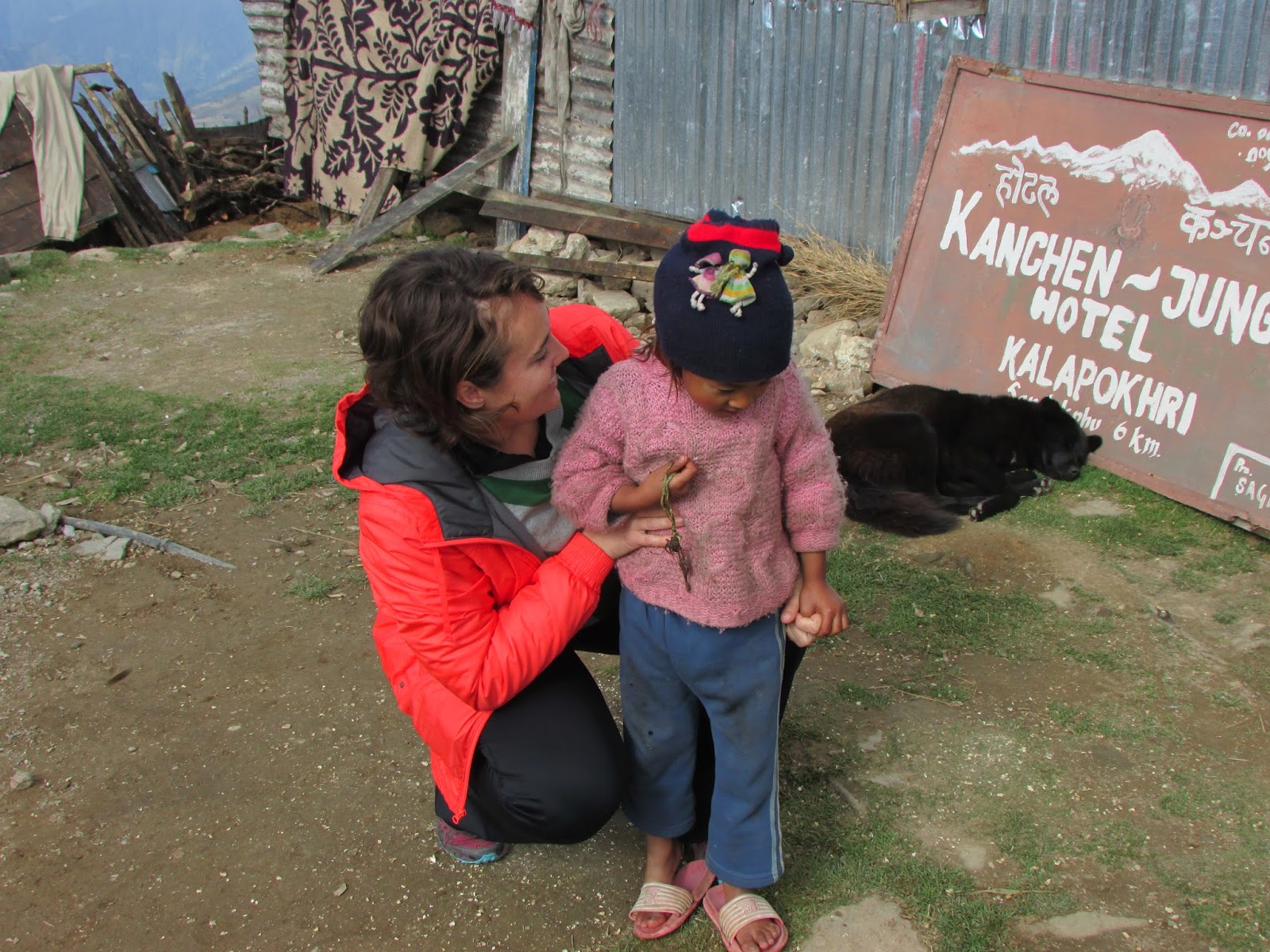
Let’s be honest, if being abroad and roaming the beautiful earth doesn’t render you grateful for being alive, then there’s a good chance you are doing it wrong. Traveling, be it for a week or a lifetime, is great. It reminds you how important the simple things in life are, and makes the less than stellar aspects more palatable. If you are the one who planned your trip, funded it, and for all intents and purposes, made sure that S actually happened, who should you show your gratitude to? The answer, my friends, is yourself, your travel companions, those in the country you are visiting, as well as the random person you passed on the street, the animals walking around, smiling children, and, of course, life overall. Basically, your gratitude should be so overwhelming that you are just walking around thanking everyone you come in contact with. If that seems too much for you, here are 10 solid ways to outwardly show your appreciation for life being super awesome


Please help this person look less ridiculous
Offer to take Someone’s Picture: While this may not be as relevant in modern days with this ridiculous piece of equipment being so popular, people like to have their pictures taken. Selfie stick or not, a picture taken by one person of another person or group of people will always look better than trying to get your selfie on. Even if you don’t speak the language of someone trying to get a picture of themselves, use some sign language. Making your hands into a box and saying "cliiiiiccckk," is pretty much universal. Show some gratitude by helping someone else capture a special memory from a trip that they are deeply happy to be on as well.


Learn Some Local Phrases: Ok, ok, so maybe we aren’t all going to become polyglots, but do we really have to be totally ignorant of a language? While English is becoming more and more prevalent (with many people opting to learn it rather than local languages elsewhere), learning at least a few words and phrases in a culture goes a long way. People love to hear words in their own language, especially if you are in their country. Please and thank you are musts, but actually learning words that help you count, ask how much, or even just something silly that can make someone laugh, are all great. The effort put in to learn these phrases shows gratitude more than a thank you in English ever could.


Be a Conscious Tourist: Among all things on this list, being a conscious tourist may be at the top. Learning phrases is keenly important, but actually learning the culture shows true gratitude for being a welcomed guest. Be it dressing culturally appropriate or avoiding activities that are culturally inappropriate but created for tourist purposes (i.e sex tourism in Thailand) learning this dichotomy is a must for a conscious traveler. Along with the former, finding local accommodation, tours, shops, and places to eat are some of the easiest ways to show gratitude and better your travel over all.


Support Street Performers: Without a simple donation here or there, street performers wouldn’t exist. If you find yourself walking down a street and enjoy the music, art, poetry, or incredible physical accomplishment you see, reach in your pocket and put your money where your happiness is. All donations, regardless of denomination, are accepted. While some may argue that this encourages the black market, the truth is that street performers add joy to life, as well as make streets safer by garnering more attention to areas they are performing. Performers bring in a higher volume of people, and, coincidently, normally perform at night. Safer streets = happier people = better existence. 

Support art and creativity

Saving your Leftovers: Why would one save their leftovers? Because wasting food is silly, and even if you aren’t going to eat it, many homeless people like to hangout where the tourists flock. Instead of getting hassled, or getting upset when someone asks you for change, give a person some of your food. You’ll be amazed with how grateful a hungry person will be when given something to eat. This is a very simple gesture, and one that is mutually beneficial to yourself and the no longer rumbling belly of the person receiving the food.


Not Giving Money to Street Children: While this seems harsh, and almost in contrast to the last form of gratitude, it is the best thing you can do for street children. The truth is, there is a large correlation between children receiving money and not returning to school. Children who tend to work or beg and receive money are positively rewarded for doing so. School may be lucrative in the long-run, but money in hand is immediate gratification. Sometimes they are forced by their parents, other times it is on their own accord, but the truth is, as long as it is an alluring option, it will continue to happen. If you do want to help children as a form of gratitude, find a local organization that works with street kids and donate your time or money. While a little bit of money given directly to a child may be somewhat helpful in the short-term, I promise its long-term implications are not positive. 


Artist's welcoming tourists on a local train
Handwritten Notes, Postcards, and Thank You’s: This is coming from a person whose handwriting is nearly illegible, handwritten anything these days will bring a smile to someone’s face. Can you draw? It doesn’t matter. Making your own thank you card, writing a poem, or even just doodling something for someone secretly in their travel journal for them to find later will bring joy to someone's life.


Being Respectful in your Accommodation: While your accommodation abroad is your home at the time, it really isn’t your home. In fact, there is a good possibility you share at least the location, if not the actual room, with other travelers. Show your gratitude by not being a dick! You can do this buy cleaning up after yourself, being quite during the early morning or late night, using a shared room only for sleeping, and most important of all, not trying to hook up secretly when you are in a dorm room. You're not being sneaky, your being obnoxious. Choosing your accommodation according to what your intentions are in a place, as well as treating it as if it was your own, oozes gratitude, and will result in a good karma down the road. 


Being Environmentally Friendly: While not all destinations you visit will be up on their green game, part of showing gratitude is being good to the earth on which you are roaming. One super easy way to do this is by cutting down on single-use items you will definitely come in contact with. If you are street food or drink fan, bring your own container and liquid receptacle, as well as reusable utensils (or eat with your hands, it’s fun!). Do you buy stuff from stores often? Bring your own sack! These ideas, as well as self-powered modes of transpiration, are easy ways to be more green and give this beautiful earth a giant bear hug!


Bringing home gifts: Everyone loves gifts, even people who say they don't. Buy or make some gifts for people, especially those who least expect it. Even if you don't see the happiness they get from receiving said gift in the moment, it will absolutely mean something to the receiver. 


Photos courtesy of: Wall Street Journal and author


Wednesday, July 1, 2015

How We Do it

The beauty of reaping the benefits of making travel a priority
One of the most frequent questions I am asked by friends and family of my nomadic lifestyle is "how do you do it?" Most people, save for a few who may have no cognizance of the slightly judgmental tone in their voice, are generally curious about how one becomes a nomad in the modern age. While I'm working on a larger, more in-depth piece about ditching the 9-5 for a more non-traditional lifestyle, the answer to this question can be found with ease. The first step, of course, is commitment to a goal.


When I left the states for my first extended travel in 2012, I had made travel a priority. I started saving and planning (which was more an exercise in excitement than actually creating a concrete itinerary) over a year out, and made decisions based on wanting to be abroad. Most of these decisions revolved around my personal budget. While I was willing to spend $800 on a TEFL certification (a source of travel income) I became less and less inclined to spend frivolously on nights out. Turning down happy hours, dinners, and bar crawls in your early twenties isn't always fun or easy, but the money saved each night-in equated to literal weeks in Chiang Mai where my daily budget was around $9-a-day. With any goal comes sacrifice, and part of that sacrifice is taking a hard look at your weekly expenditures, deciphering between necessity and excess. You can be as lax or as hardcore as you like, but 10, 20, $30 goes a long way in some of the most loved backpacking destinations.


At the start of my trip, I had saved between 7,000-8,000 USD. With my initial plan of only traveling for 6-months, and hopefully returning with a little fallback money, that gave me a budget of between $30-40 per day. Take out the $900 for my extremely cheap, extremely uncomfortable Eastern China Airline flight, and I was looking at closer to $25-30 per day. While this is more than sufficient to travel around SE Asia if youz a hustla (holla atcha boy), traveling with a small source of income can make a huge difference. Before my trip, I acquired a freelance writing job. It started out very humble, but by the end I was making close $225 a week. This was small potatoes in the states, but in Asia this allowed me to subsidize my trip, only dipping into my savings for things like travel, higher-priced activities, western indulgences, or the extended stint in Australia. Small injections of funds is the performance enhancing drugs of travel.


Leading high schoolers into the desert...while playing dress up. A job is a job!


Though writing was my PED, travelers have a slew of fancy tricks to continue their time abroad. The best way to do this is with passive income. If you are lucky enough to have a place to rent out, this extends travel. If you have a benefactor, sugar mama/daddy, know a good pyramid scheme or can procure a grant, this is gold too. For the less lucky, creativity is key. Travelers I've met have done anything from joining the Malaysian circus to teaching online TEFL classes to Brazilians while working under the table and living in Vietnam. I'm currently subsiding off of a mix of rent money, savings, and working as a guide for a travel company specializing in high school summer trips. Do any of these jobs pay well? No, in fact, it is sometimes a joke how many hours you put in for dismal pay, but what they don't offer in salary they make up for in subsidized experiences. If you have any talent, skill, or hobby you can translate into a good, you will be able to make money while abroad. It just takes a leap of faith.


While the preceding advice is important, the idea of a leap of faith may be the most necessary tool of becoming a nomad. Growing up in the states, I feel we are programmed to be constantly working towards a goal, a new position, a higher pay scale, etc. With this idea,  the idea of stepping out of line and reflecting seems ludicrous. We rarely take time off, so why devote a month, 6-months, or a year to travel or pursuit of something that doesn't necessarily equate to one of the proceeding goals? My answer? Because you can, and you should, and in many other developed countries it isn't an insane idea, it is something lauded. It also helps a society grow and progress. It's my personal view that Americans are too calculated. We need concrete evidence that something will work before we even begin to dream about it. With travel, doing before defining makes all the difference in the world. If you want to live in Spain, move to Spain. You can figure out the details when you get there. If you want to travel, buy your ticket and let the numbers and budget come to terms with all the new insights you will gain once abroad. On our money in the US it states "In God we Trust," yet I feel what we leave up to fate is truly minimal. To step outside of ones comfort zone, to step outside what we view as a normal way of life, one must truly take a leap of faith.


While I've existed on both sides of the faith fence, I can tell you that the most important thing I've learned from travel is believing that what you want can become a reality. While saving, creating multiple sources of income, and penny pinching can and will make travel a reality, nothing is as potent as being ready to take a leap of faith. Once you believe that your dream is possible and put yourself in position to pursue it, good things are bound to follow. It may not be instantaneous, but the will of the world works wonders for those willing to let it.
 

The beatiful stairs of Essaouria. One may not know what they are misssing when they stay put, but they will only find out if they take off


Photos courtesy of author and Wayfinderali


Tuesday, September 16, 2014

Patience is a Virtue... or the Collateral Damage of Travel


A few days back, I decided to bike commute to a morning yoga class. It was a dreary day, and although I was cold, I enjoy biking. I'm not a big fan of being in the car, and I'm especially not a big fan of daily commutes. After hitting some traffic, I found myself on a relatively desolate, two lane road, but with little to no bike lane. Though I was enjoying my morning jaunt to class, the lady driving the overpriced, luxury SUV behind me seemed to have a less jovial attitude as she rode my ass, laid on the horn, and nearly clipped me while erratically changing lanes (why she didn't change lanes earlier is beyond me). The Irony of our opposing mentalities and daily endeavors aside, what this small incident remind is a belief that those who travel, consciously or not, have a more developed sense of patience.

I'll be the first to admit there are definite holes in this theory. If you put me in a car, morning after morning, trying to beat traffic on the way to a job I probably am not entirely stoked on, I'm sure my patience would be waining as well. In the same light, not all people who have "traveled," have been bestowed the opportunities to learn patience that some of us vagabonds have...but bear with me, I think I can get you to see the light.

There is an intangible, yet gaping, divide between the experiences of those who have left the developed world, and those who have not. In the developed world, we believe in the "on-the-go," lifestyle. Especially in the land of the stars and stripes, the idea of sitting and eating a meal,  actually enjoying your morning coffee, or even focusing on a single task, is unheard of. We are programmed from a young age to forget our own schedules, believing that if we are late, or something breaks our daily routine, the end of the universe is inevitable. It's sad, but the idea of waiting or portraying the tiniest sliver of patience, is about as common as a lasting marriage.

Now, imagine THIS existence compared to places where linear time doesn't rule all. A place where schedules come and go, and on top of that, shit CAN and WILL happen at nearly every opportunity. Sure a bus or train can be late in the developed world, but imagine not knowing if a train or bus will even show up at all. Maybe it never reached capacity, so the company decided to scrap it for the day. Maybe free roaming animals decided to take a nap in the middle of the street, so the patrons of the bus are forced to wait while the flustered driver tries to wake and shoo the sleepy beasts. If that was something you experienced a few times in your life, do you really think a biker on the far end of one of two lanes would infuriate you to the point of near homicide?

What you learn while venturing into different existences is that the world is full of surprises. While an unexpected hiccup in the states may derail a person's day, a literal derailed train elsewhere in the world may not phase someone who is used to the adapting to life's curveballs. The unexpected is inevitable, and while we will all experience it at some point, how we react to this surprising visitor is what really matters. My guess is that 9 times out of 10, a person who has traveled will be much more patient and understanding to this simple twist of fate than that of their counterparts. I'm fairly certain that the person who traveled may even see the unexpected as an opportunity, not a burden, and their day will continue in a seamless fashion.

The next time you have an encounter with an unplanned detour, remember there are always different routes back to the main road. Are you going to be the person who lays on the horn and complains, or are you going to change lanes with grace?


Photos courtesy of Doscity

Thursday, September 26, 2013

If this isn’t reality, then what are we doing here? - Please don’t tell me that living abroad isn’t “real life.”


Looking out over the real world


I’ll be the first to admit that of this crime, I am a culprit. It doesn’t happen all the time, but when the words emerge from behind my teeth, catapulting off my tongue into existence, I immediately feel guilty. Whether or not the transient, travel, and abroad lifestyle is something one adopts for the short or long term, the truth is, this existence is, in fact, real life.


For those of us who have shed our homeland reality for the unbridled freedom of being abroad, we’ve definitely experienced similar results from our friends, family, and acquaintances. Some are very supportive of the choice. The ability to learn, grown, and experience in an atypical fashion is something they admire. Others are not as keen to the idea. Marred with conversations about money, future, and personal health, those unfamiliar with this very normal lifestyle tend to believe it exists outside of the “real world.” As if the experiences, places, people, growths, emotions, falls, triumphs, cuts, scraps, scars, sounds, smells, tastes, loves, laughs or lessons presenting themselves each day are not as relevant as those that exist within the paradigm of our homeland. While the world we all see every day is very tangible, the idea is that only certain aspects of it can be considered “real.” This frame of mind is a misconception.


The problem with the idea of travel being of the fabricated nature is that, if it isn’t real, what the hell are we doing? If experiences in different cultures aren't part of the existing world, what does that mean for the places, the people, and the past times which we have all imbibed in for some part of our reality? I’ll give you an example. An absolutely stunning friend of mine has spent the better part of the past 6 years  imbibing, surviving, and most importantly, thriving in southeast Asia. She has spent time in a multitude of different cities, has worked as a teacher, dancer, and currently as a blessed jewelry designer. Profession aside, overall she is a highly intelligent, spiritual, and beautiful person who has seen both her quality of life, and more importantly, overall health greatly improved since leaving her humble abode. In the same light, she has a boisterous, supportive community of other fellow travelers (wanders, tumbleweeds, hustlers, gypsies) who have also chosen the same lifestyle. Because these folks decided to take an irregular approach to life, does that not mean their triumphs have not been exceptional


There are setbacks, naturally. Many of us do exist in a world of duality. We may be able to permeate boarders with chameleon like grace, but keeping a balance between our home and our home sometimes poses a problem. Choosing to travel can put strain on relationships with those not along for the ride. In the same regards, remembering and realizing pressures from the west can often times combat the beautiful reality staring you in the eyes each moment. Learning to juggle, though, is a small price to pay for creating a reality you see fit. 


Whether you are a person who aspires to live abroad or not, calling this lifestyle unreal is belittling. It takes away from the amazing efforts of those who have chosen to design a reality they adore, as well as the people they are meeting, the beautiful countries they visit, and the aspects of new cultures that keep them hustling everyday to stay afloat. The next time you find yourself in this conversation, realize reality is subjective. While some may chose the school, family, career, death lifestyle, it is OK if some don’t. Reality is what we make of it, and sometimes it is just a bit brighter when it involves beautiful mountains, dancing peacocks, and a strange land you are eager to become acquainted with